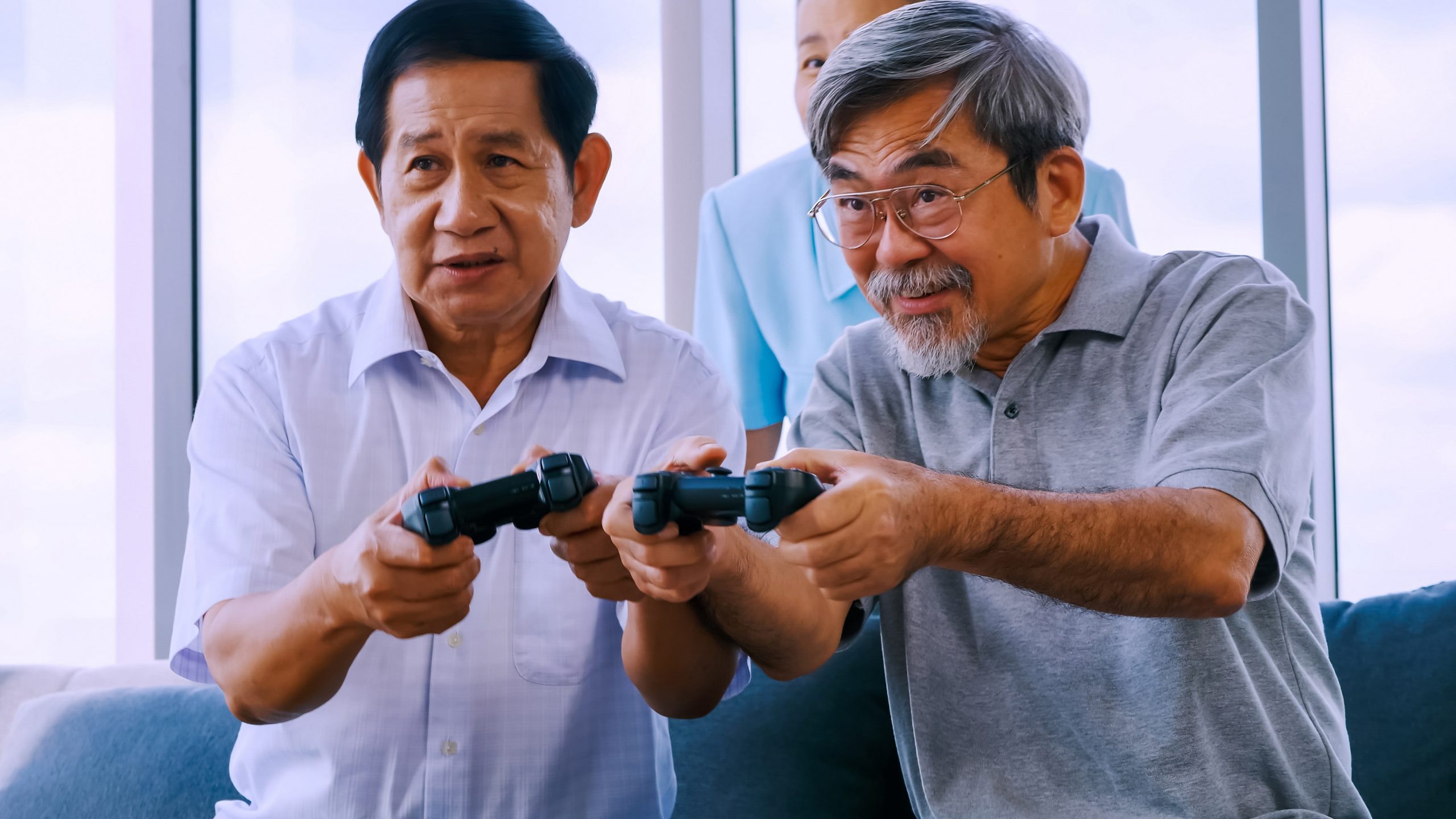
The idea that online gaming is primarily the domain of young people is one of the most persistently inaccurate assumptions in the entire digital entertainment landscape — a stereotype whose contradiction by the actual demographics of online gaming participation has become increasingly difficult to sustain as the population of older adults who engage regularly and enthusiastically with digital games continues to grow in size, diversity, and sophistication. Older adults represent one of the fastest-growing segments of the gaming population worldwide, and their engagement with online games is driven by motivations whose range and depth is at least as varied as that of any other demographic — the desire for mental stimulation and cognitive challenge, the pleasure of social connection with family members and friends across geographic distances, the satisfaction of developing new skills and achieving meaningful progress in an engaging activity, and simply the enjoyment of entertainment that is both accessible and genuinely fun. The health benefits of appropriate online gaming for older adults have been extensively documented in research contexts — including improvements in cognitive processing speed, working memory, attention, and the social wellbeing that comes from meaningful digital connection — and these evidence-based benefits provide a genuinely good reason for older adults, their families, and their carers to approach online gaming not as a trivial screen-time activity but as a genuinely valuable component of a cognitively and socially active later life. This guide covers the best online game categories and specific platform recommendations for older adults, selected with honest attention to accessibility, cognitive appropriateness, social value, and the simple but essential quality of being genuinely enjoyable to play.
Classic Card and Board Games Online: The Digital Versions of Beloved Favourites
For older adults whose first instinct about online gaming is scepticism rooted in unfamiliarity with digital entertainment platforms, the availability of beloved classic games in well-designed online formats provides the most accessible and most immediately comfortable entry point into digital gaming — games whose rules, objectives, and strategies are already known and enjoyed, presented in digital interfaces whose quality varies from the serviceable to the genuinely excellent. The online versions of Solitaire, Mahjong, Bridge, Chess, Scrabble, Sudoku, and the full range of classic card and board games whose analogue equivalents have been enjoyed by generations of players provide both the cognitive challenge and the enjoyment of familiar gameplay in formats whose accessibility requires no previous digital gaming experience and whose learning curve is essentially zero for anyone who already knows the game being played.
Online Solitaire — available in its classic Klondike form and in dozens of variant formats including Spider Solitaire, FreeCell, and Pyramid — remains one of the most widely played games in the entire online gaming ecosystem across all age groups, and its particular popularity among older adults reflects both its single-player accessibility that requires no other participants and its cognitive engagement profile — the combination of strategic planning, pattern recognition, and problem-solving that a well-played game of Solitaire demands provides genuine mental exercise whose regular engagement supports the cognitive maintenance that research consistently associates with active mental stimulation in later life. Microsoft’s classic Solitaire Collection — available as a free download and through web browser play — provides the most widely recognised and most consistently rated version of the game, with clean visuals, intuitive controls, and the kind of reliable performance that older adults whose digital experience may be more limited benefit from in a gaming platform. Online Mahjong — the tile-matching game whose visual complexity and strategic depth make it one of the most cognitively engaging of all classic games in digital format — is equally well-served by numerous free online platforms whose quality and accessibility make it a perennial recommendation for older adults seeking both cognitive challenge and the particular satisfaction of completing a game whose visual rewards are among the most immediately pleasing in the online gaming catalogue.
Online Bridge — available through platforms including Bridge Base Online, whose free-to-play model and genuinely welcoming community of players across all skill levels has made it the dominant online destination for Bridge enthusiasts worldwide — offers older adults whose passion for this intellectually demanding card game has been limited by the logistical challenges of assembling four willing and available players the opportunity to play whenever the mood takes them against opponents and partners from around the world. The social dimension of online Bridge — the chat functionality, the table etiquette conventions, and the genuine community of Bridge enthusiasts that platforms like Bridge Base Online have cultivated — makes it one of the most socially rich as well as one of the most cognitively demanding game options available to older adults whose appreciation for the game’s depth and their enjoyment of the social interactions it occasions have not diminished with age even as the practical opportunities for in-person play have become less reliably available.
Word Games and Trivia: Keeping the Mind Sharp Through Language and Knowledge
Word games and trivia platforms represent one of the most cognitively beneficial and most straightforwardly enjoyable online game categories for older adults — games whose engagement with language, vocabulary, general knowledge, and the kind of accumulated life experience whose breadth and depth is one of the genuine advantages of long life provides both genuine cognitive exercise and the particular pleasure of excelling at something through the application of knowledge and capability that decades of learning and experience have genuinely developed. The older adult who brings decades of reading, professional expertise, and life experience to a vocabulary game or a general knowledge quiz is not at the disadvantage that unfamiliarity with fast-twitch gaming mechanics creates in other genres — they are in their element, and the games that recognise and reward this accumulated knowledge provide the most genuinely satisfying gaming experiences available for this demographic.
Wordle — the daily word-guessing game whose deceptively simple premise, whose single daily puzzle format that respects the player’s time, and whose social sharing mechanic that created one of the most remarkable gaming communities of recent years has made it a genuinely cross-generational phenomenon — is one of the most widely recommended online games for older adults whose accessibility, short session length, and genuinely satisfying cognitive challenge make it an excellent daily mental exercise whose social dimension, for those who share their results with family and friends, adds the connection element that transforms a solitary puzzle activity into a shared experience. The New York Times Games platform — which hosts Wordle alongside its iconic Crossword, the word association game Connections, the spelling challenge game Spelling Bee, and the letter tile game Strands — offers perhaps the most consistently high-quality collection of word and language games available on any single platform, with a subscription model whose modest monthly cost reflects the genuine quality and the daily engagement value of the games it provides. For older adults whose love of language, crossword puzzles, and general knowledge is a defining feature of their intellectual life, the New York Times Games platform provides a daily ritual of cognitive engagement whose quality and variety makes it among the most recommended gaming destinations in the entire online games landscape.
Trivia games — whose engagement with general knowledge across history, geography, science, culture, sport, and the full breadth of human knowledge provides the kind of cognitively stimulating recall and recognition exercise that research associates with the maintenance of memory function in later life — are available through platforms ranging from the simple and free through to the socially rich and gamified. Kahoot, originally designed for educational classroom use but increasingly embraced as a social quiz platform for groups of all ages, allows families to create and share custom quiz games whose content can be personalised to the specific knowledge and interests of the older adult participants — a personalisation that makes the trivia experience more engaging, more relevant, and more genuinely challenging than generic quiz content whose subject matter may not reflect the specific knowledge strengths of the individual player. Sporcle, whose vast library of community-created trivia quizzes spanning virtually every conceivable subject area provides an essentially inexhaustible source of knowledge-testing games at every difficulty level, is a further excellent destination for older adults whose trivia enthusiasm extends across the full breadth of subjects that a lifetime of curious engagement with the world has equipped them to engage with confidently.
Puzzle and Strategy Games: Cognitive Challenge in an Accessible Digital Format
Puzzle and strategy games occupy the intellectually demanding end of the online gaming spectrum for older adults — games whose engagement with spatial reasoning, logical deduction, pattern recognition, and strategic planning provides the most intensive and most clinically documented form of cognitive exercise available through digital gaming. The research evidence for the cognitive benefits of regular engagement with challenging puzzle games is among the most consistent in the entire cognitive health and digital gaming literature, with studies demonstrating improvements in processing speed, working memory, attention, and the executive function capabilities that underlie the most complex cognitive activities of daily life in older adults who engage regularly with demanding puzzle formats.
Jigsaw puzzle platforms — whose digital recreation of the beloved analogue activity provides all of the spatial reasoning, visual processing, and patient sustained attention benefits of physical jigsaw completion without the storage requirements, the lost piece frustration, and the table space occupation that physical jigsaw enthusiasts have always accepted as the price of the hobby — have developed into a remarkably sophisticated digital genre whose best platforms provide genuinely excellent visual quality, intuitive piece manipulation interfaces, and the social dimension of shared puzzle completion with family members who may be geographically distant but digitally accessible. Jigsaw Planet and Jigsawplanet provide free access to vast libraries of jigsaw images at a full range of piece counts from the manageable to the genuinely challenging, and their multiplayer functionality that allows two or more players to work on the same puzzle simultaneously transforms a solitary cognitive exercise into a shared social activity whose connection dimension adds significant value for older adults whose social engagement is as important to their wellbeing as their cognitive stimulation.
Strategy and simulation games — whose engagement with resource management, long-term planning, and the kind of multi-variable decision-making whose cognitive demands are both genuine and genuinely enjoyable — represent a further puzzle-adjacent category whose best examples for older adults combine intellectual depth with accessibility of interface and pace that does not demand the reflexive speed of action games whose moment-to-moment demands can make them less accessible for players whose response times are naturally somewhat longer than those of younger participants. Civilisation-style games, whose turn-based structure allows unlimited time for each decision and whose historical and geographical content resonates strongly with older adults whose interest in history and culture is often a defining feature of their intellectual profile, are available in browser-based free-to-play versions including FreeCiv whose accessibility makes them viable gaming options for older adults whose device capability and digital gaming experience may limit their access to the most graphically demanding commercial titles.
Social and Multiplayer Games That Reduce Isolation and Build Connection
The social dimension of online gaming for older adults deserves particular emphasis and particular attention — not because cognitive challenge and entertainment value are less important, but because the social isolation and loneliness that disproportionately affect older adults, particularly those who live alone or whose mobility limits participation in community activities, represent one of the most serious and most well-documented threats to wellbeing and health in later life. Online games whose design incorporates genuine social interaction — the ability to play with family members and friends regardless of geographic distance, to join communities of fellow enthusiasts, and to experience the kind of casual, enjoyable human connection that shared gaming provides — offer a specific and genuinely valuable contribution to the social wellbeing of older adults that no amount of cognitive benefit alone could replicate.
Words With Friends — the Scrabble-inspired asynchronous word game whose turn-based structure allows players to take their time over each move and whose social design philosophy of connecting players through friendly competition has made it one of the most widely played games among older adults in the entire mobile gaming ecosystem — is perhaps the single most recommended online game for older adults whose social motivation for gaming is as important as their cognitive engagement. The ability to maintain an ongoing game with children, grandchildren, siblings, or friends across any geographic distance, to exchange messages within the game interface, and to track the results of multiple simultaneous games creates the kind of warm, low-pressure, socially meaningful connection whose quality research consistently associates with the wellbeing outcomes that combat the social isolation risks of later life. The asynchronous format — in which players take their turn whenever convenient rather than requiring both players to be present simultaneously — makes it particularly well-suited to older adults whose schedules may be less predictable or whose concentration capacity for sustained synchronous gaming sessions is more limited than that of younger players.
Online Bingo — available through numerous dedicated platforms whose game formats range from traditional 90-ball bingo through to themed and variant formats whose novelty provides variety within a familiar structural framework — holds a special place in the games and gambling landscape as an activity whose particular appeal to older adults reflects both its social heritage as a communal activity with strong community associations and the genuinely enjoyable combination of luck, anticipation, and the chatroom social interaction that the best online bingo platforms provide as an integral part of the gaming experience. The accessibility of online bingo — whose rules require no strategic expertise, whose pace is comfortable rather than demanding, and whose social chat dimension provides the casual human connection that makes the activity more than simply a numbers game — makes it one of the most consistently recommended online gaming options for older adults whose comfort with digital technology may be more limited and for whom the social dimension of the gaming experience is at least as important as any individual game outcome.
Brain Training and Cognitive Wellness Platforms
The dedicated brain training and cognitive wellness platform category — whose products are specifically designed and in some cases clinically validated to provide the cognitive exercise most beneficial for maintaining and improving specific mental capabilities — represents the most intentionally therapeutic end of the online gaming spectrum for older adults and the category whose marketing most explicitly addresses the cognitive health motivations that research consistently identifies as primary drivers of older adult engagement with digital games. The distinction between genuinely evidence-based cognitive training platforms and those whose claims exceed their demonstrated efficacy is an important one for older adults and their families to understand clearly when making investment decisions in this category, whose commercial success has attracted providers whose product quality varies considerably in the rigour of its scientific foundation.
Lumosity — one of the most widely recognised cognitive training platforms in the consumer market — offers a programme of scientifically developed games targeting specific cognitive domains including memory, attention, processing speed, flexibility, and problem-solving, with a personalised training plan whose content adapts to each user’s performance profile and whose progress tracking provides the visible evidence of improvement that motivates continued engagement. The research basis of Lumosity’s specific claims has been the subject of both scientific scrutiny and regulatory action in the United States, and the most honest assessment of its benefits is that regular engagement with its training programme produces measurable improvements in the specific skills the games practise — whose transfer to broader real-world cognitive outcomes is more modestly supported by the current evidence base than the platform’s earlier marketing claimed. For older adults whose primary motivation is the enjoyment of cognitively stimulating daily gaming with the reassurance of professional design behind the game selection, Lumosity provides a well-structured and genuinely engaging platform whose value is real even if the scope of its benefits is more modest than the most optimistic interpretations of its clinical claims suggest.
Peak, Elevate, and BrainHQ are further cognitive training platforms whose programme designs, specific game selections, and scientific advisory boards provide varying degrees of evidence-based confidence in their cognitive benefit claims, and whose comparative evaluation by older adults and their families should include honest assessment of both the specific claims being made and the quality of the evidence supporting them. For older adults whose primary gaming motivation is entertainment and social connection rather than specifically therapeutic cognitive training, the evidence strongly suggests that the cognitive benefits of regular engagement with the challenging, enjoyable, and socially connected games described throughout this guide are at least as substantial as those achievable through dedicated brain training programmes — a finding that liberates older adult gamers from any obligation to frame their gaming activity as therapeutic homework and encourages them instead to pursue the online games they simply find most genuinely enjoyable, most socially rewarding, and most personally suited to the specific pleasures and capabilities that make their individual later life experience as rich, as engaged, and as intellectually alive as any period of their remarkable lives.
Conclusion
The online gaming landscape for older adults is richer, more varied, more accessible, and more genuinely beneficial than any lingering stereotype of gaming as a young person’s activity could suggest — a diverse ecosystem of classic card and board games, word and trivia challenges, puzzle and strategy formats, social and multiplayer experiences, and dedicated cognitive wellness platforms whose combined offering provides something genuinely valuable for every older adult whose curiosity, whose social instinct, or whose commitment to maintaining cognitive vitality has led them to explore what digital gaming has to offer. The games that deliver the greatest benefit are those that combine genuine intellectual challenge with genuine enjoyment and genuine social connection — the trinity of values whose presence together in a single gaming activity produces the most comprehensive and most sustainably motivating experience available in the entire online gaming catalogue. For older adults, their families, and the carers and health professionals who support their wellbeing, the honest conclusion is clear: finding the online games that any individual older adult most genuinely enjoys is not a trivial leisure pursuit but a meaningful investment in the cognitive health, the social connection, and the daily quality of life that everyone, at every age, deserves to experience as richly and as fully as their circumstances allow.