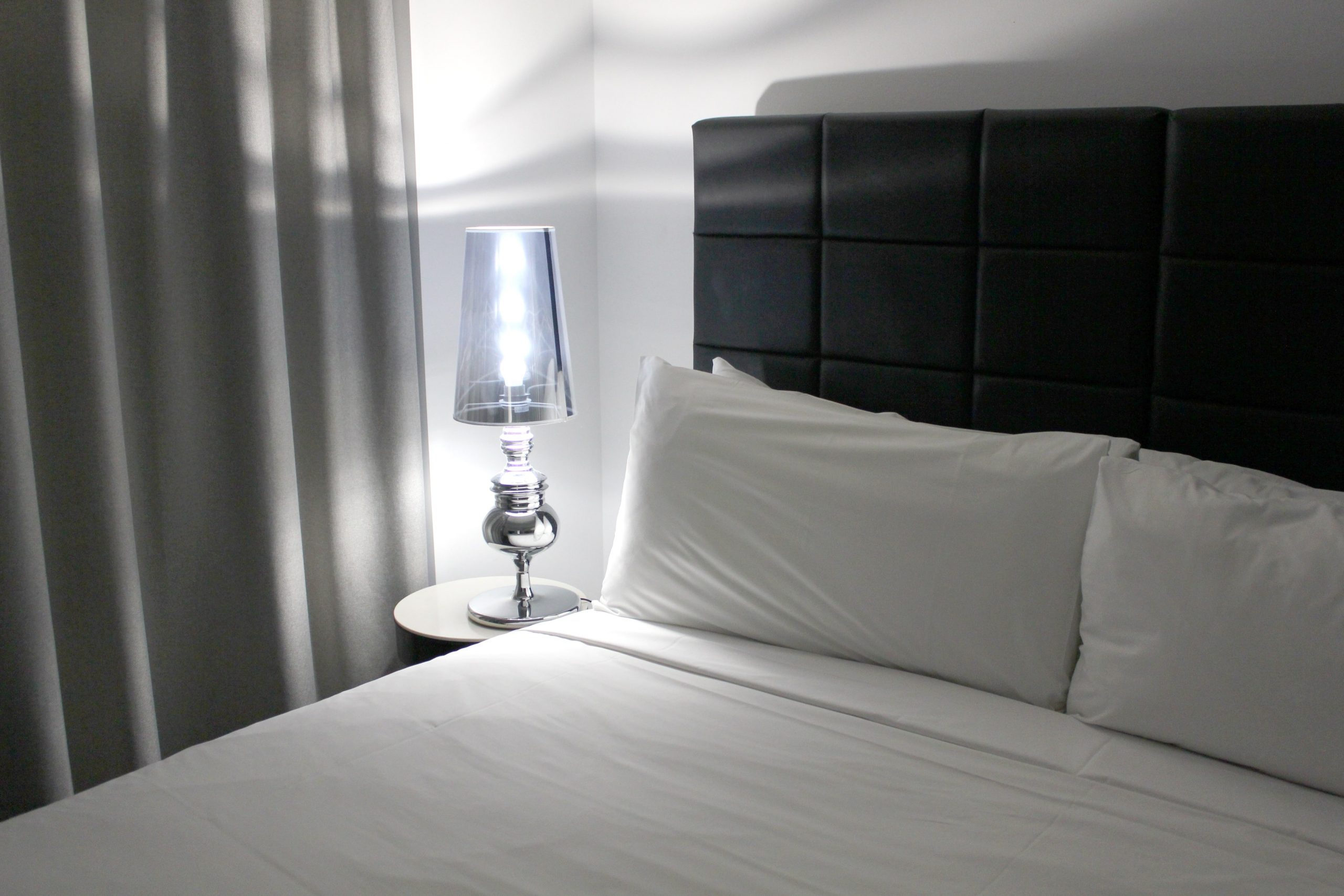
Minimalist house design has captured the imagination and the aspirations of homeowners around the world with a consistency and a staying power that sets it apart from the shorter-lived trends that cycle through interior design culture with regular predictability. Its appeal is not difficult to understand — in a world of relentless visual noise, accumulating possessions, and the persistent low-level anxiety of domestic clutter, the minimalist home offers something genuinely different: space, calm, clarity, and the particular quality of wellbeing that comes from living in an environment whose every element has been deliberately and honestly considered rather than accumulated through habit, impulse, and the path of least resistance. Minimalism in home design is not, however, simply about owning fewer things or painting walls white — it is a coherent design philosophy whose intelligent application requires genuine understanding of what the style is actually achieving, what principles guide the decisions that realise it successfully, and how to create spaces that are warm, liveable, personally resonant, and genuinely beautiful rather than cold, sterile, and uncomfortably sparse. The difference between a minimalist home that feels like a sanctuary and one that feels like an unfinished showroom is entirely a matter of the quality and the thoughtfulness of the design decisions that produced it — and understanding those decisions is what this guide is designed to provide. Whether the aspiration is a complete minimalist transformation, a gradual simplification of an existing home, or the thoughtful incorporation of minimalist principles into specific rooms or spaces, the ideas and approaches covered here provide the practical, honest, and creatively inspiring guidance that makes genuinely excellent minimalist design accessible to any homeowner willing to engage with its principles seriously.
The Philosophy Behind Minimalism: Understanding What You Are Actually Trying to Achieve
The most common and most consequential misunderstanding about minimalist home design is the belief that it is fundamentally about subtraction — about removing things, owning less, and stripping a space back to its bare functional minimum. This reductive interpretation produces the cold, uncomfortable, and impersonal spaces that critics of minimalism point to as evidence of the style’s alleged inhospitality, and it misses entirely the philosophical substance of what genuine minimalist design is actually attempting to achieve. Authentic minimalism is not about less for its own sake — it is about intentionality, about the deliberate consideration of what genuinely belongs in a space and what the inclusion of each element contributes to the overall quality of the environment. The minimalist home is not empty; it is edited — a space in which every object, every surface treatment, every piece of furniture, and every material choice has been evaluated honestly against the question of whether its presence makes the space better and its absence would make the space worse.
The origin of minimalist design philosophy in the mid-twentieth century art and architecture movements whose rejection of ornament, decoration, and historical pastiche in favour of essential form, honest materials, and the intrinsic beauty of structure and proportion continues to inform the most accomplished contemporary minimalist homes. The Japanese concept of finding beauty in simplicity and restraint — expressed in the aesthetic sensibility of traditional Japanese architecture and interior design whose influence on Western minimalism is profound and widely acknowledged — contributes a philosophical depth to the minimalist design tradition that makes it something considerably more nuanced and more humanly meaningful than a trend whose attraction is merely visual. The minimalist home at its finest is not a rejection of human warmth or personal expression — it is a heightening of both, achieved through the discipline of allowing only those elements that genuinely contribute to the space’s beauty, functionality, and personal resonance to remain, and allowing their quality, their materiality, and their relationship to each other and to the space they inhabit to be fully visible and fully appreciable without the visual competition of unnecessary additions.
Understanding minimalism as a design philosophy rather than simply an aesthetic style changes how its principles are applied in practice — from the mechanical removal of objects to the more demanding and more rewarding process of genuinely evaluating each element of a space against the question of what it contributes and whether that contribution justifies its presence. This evaluative process, applied consistently and honestly across every room and every decision of a home’s design, produces the specific quality of minimalist space whose character is simultaneously restrained and rich — restrained in the sense of containing nothing superfluous, rich in the sense that everything present has been chosen with the care and the quality attention that makes each element genuinely worth having in the space whose limited visual vocabulary gives every included element proportionally greater visual weight and significance.
Colour and Light: The Foundation of Every Successful Minimalist Interior
The colour palette and the quality of natural light are the two most foundational design elements of any minimalist interior — the dimensions whose quality and management more directly determine the overall success of the minimalist aesthetic than any subsequent furniture selection, storage solution, or decorative choice. A minimalist space with the wrong colour palette or inadequately managed natural light will feel wrong regardless of how carefully every other design decision has been made, because colour and light create the atmospheric character of any interior space at a level that furniture and objects, however well chosen, cannot compensate for when the foundational elements are mishandled.
The neutral palette that characterises the most widely recognised minimalist interiors — the whites, off-whites, warm greys, and natural material tones that appear in the majority of minimalist home photography and design references — is not the only valid colour approach for minimalist design, but it is the one whose specific qualities most naturally serve the minimalist aesthetic’s goals. White and near-white walls reflect light maximally, making spaces appear larger and more luminous than they would be in darker colours; they provide a visually quiet backdrop against which the forms and textures of furniture and materials read with the clarity that minimalist design requires; and they create the sense of spatial openness and visual breathing room that is one of the most immediately perceptible and most consistently appreciated qualities of the minimalist interior. The specific undertone of any white or near-white — whether it reads as cool and crisp, warm and creamy, or subtly green or grey — has a significant impact on the atmosphere of the space it creates, and the selection of a white that is genuinely appropriate to the quality of natural light the specific room receives is a colour decision whose careful execution produces noticeably better results than the arbitrary selection of the first appealing white from a paint chart.
Maximising natural light is both a practical requirement and a philosophical expression of the minimalist design ethic — the commitment to allowing the essential qualities of the space itself, including the quality of daylight that moves through it across the hours of the day, to be fully present and fully appreciable rather than obscured by the window treatments, competing artificial light sources, and visual clutter that prevent natural light from performing its full transformative effect on an interior. Minimalist window treatments favour the simplest possible approaches that maintain privacy where needed while allowing maximum light transmission — simple roller blinds in neutral linen or cotton, floor-to-ceiling curtains in lightweight natural fabrics, or the absence of any window treatment in rooms where privacy is not a concern. The use of mirrors to amplify and redistribute natural light in spaces whose proportions or orientation limit its natural penetration is one of the most effective and most classically minimalist light management strategies available, providing a purely functional justification for an object whose visual simplicity and material quality make it entirely consistent with the minimalist aesthetic rather than a decorative addition that sits in tension with it.
Furniture Selection and Arrangement: The Art of Choosing Only What Truly Belongs
The furniture decisions in a minimalist home carry more design weight than in any other interior style — because the reduced number of objects means that each piece of furniture is more visible, more influential on the overall character of the space, and more closely scrutinised than in rooms where the visual field is more densely populated. The minimalist approach to furniture selection requires both a genuine willingness to question which pieces of furniture a room actually needs and the commitment to purchasing or keeping only those pieces at a quality level whose materials, proportions, and craftsmanship repay the visual prominence that minimalist presentation gives them.
The principle of selecting fewer pieces of higher quality rather than more pieces of lesser quality is central to the minimalist furniture philosophy, and its application in practice means investing the furniture budget differently from the conventional approach — concentrating expenditure on the pieces that matter most visually and functionally, purchasing the best quality that the available budget can support in those key pieces, and accepting that this investment necessarily means owning fewer pieces overall. A living room whose seating consists of a single sofa of genuinely excellent quality — whose proportions are carefully considered relative to the room’s dimensions, whose upholstery fabric is beautiful in texture and colour, and whose construction quality is evident in its form and its longevity — provides a more satisfying minimalist interior than the same room furnished with two sofas, an armchair, a side table, a console, and a bookcase, all of adequate but unremarkable quality, whose combined presence fills the room with the visual business that minimalism specifically seeks to avoid.
The arrangement of furniture in a minimalist room should reflect the same principle of deliberate intentionality that guides its selection — placing pieces in the positions that most naturally serve their function, allow comfortable circulation, and create the spatial composition whose visual balance and openness define the minimalist aesthetic at its most accomplished. Floating furniture away from walls — a counter-intuitive move for many homeowners whose instinct is to push furniture to the perimeter to create maximum floor space — is one of the most effective spatial moves in minimalist interior arrangement, creating the impression of deliberate placement rather than room-filling accommodation and allowing the floor to be read as a continuous, uninterrupted plane whose visual expansion contributes significantly to the sense of spatial openness that minimalist interiors at their best so convincingly achieve.
Storage Solutions: The Invisible Infrastructure That Makes Minimalism Liveable
The relationship between minimalism and storage is one of the most practically important and most frequently misunderstood aspects of the minimalist home design — because the visual simplicity and apparent emptiness of an accomplished minimalist interior does not reflect an absence of possessions so much as the successful concealment of the everyday objects whose presence is necessary for comfortable daily life but whose visual presence in a minimalist space is inconsistent with its aesthetic and atmospheric goals. The genuinely liveable minimalist home is one that has solved the storage problem thoroughly and invisibly — creating the concealed storage infrastructure that allows the visual surface of the home to remain clean and uncluttered while the practical requirements of daily life are fully and comfortably accommodated behind closed doors, inside built-in units, and within the purpose-designed storage solutions whose invisible contribution to the minimalist aesthetic is as important as any visible design decision.
Built-in storage is the most visually seamless and most spatially efficient storage solution available for the minimalist home, and its integration into the architectural fabric of the space — flush with the wall surface, finished in the same paint colour and material as the surrounding wall, and operated through push-to-open mechanisms that eliminate the need for handles or knobs that would interrupt the clean surface — achieves a level of visual integration that freestanding furniture storage cannot replicate regardless of how simple its design. The investment in quality built-in storage, particularly in the hallway, the bedroom, and the kitchen whose daily-use objects most consistently threaten the visual clarity of minimalist spaces, is one of the most impactful single investments available in any minimalist home transformation project — and its upfront cost is justified by the ongoing daily quality of the living environment it creates and maintains.
The decluttering process that precedes any successful minimalist transformation deserves its own acknowledgement as a design activity as important as any selection or installation decision — because the best storage solution in the world cannot maintain a minimalist aesthetic in a home whose possessions exceed the available storage capacity, and the honest evaluation of which possessions genuinely earn their place in a home whose design philosophy prioritises quality and intentionality over accumulation is the personal work that no interior designer can do on a homeowner’s behalf. The home and garden that has undergone this honest editing process — whose contents have been evaluated against the question of whether each object genuinely contributes to the quality of life in the home, whether its absence would be genuinely felt, and whether its presence is justified by use, beauty, or both — is the home whose minimalist transformation produces the most sustained and most deeply satisfying result, because its visual simplicity reflects a genuine and considered relationship with the objects it contains rather than a cosmetic arrangement that conceals unresolved accumulation behind closed doors.
Texture, Materials, and the Warmth That Prevents Minimalism Feeling Cold
The accusation most frequently levelled at minimalist home design — that it produces cold, sterile, and unwelcoming spaces whose visual restraint comes at the cost of human warmth and sensory richness — is a criticism that applies specifically to the poorly executed versions of the style rather than to the genuinely accomplished minimalist interior whose warmth, tactile richness, and personal character are achieved through the careful and deliberate selection of materials, textures, and natural elements whose presence brings the sensory depth that an overly clinical interpretation of minimalism denies. The successful minimalist interior is not a white box — it is a carefully curated environment whose warmth comes from the natural materiality of its surfaces, the layered texture of its finishes, and the quality of the craftsmanship whose evidence is visible in every carefully made object it contains.
Natural materials are the most important source of warmth and sensory richness in a minimalist interior, and their generous use — in flooring, in furniture, in textiles, and in the decorative objects whose number may be small but whose individual quality and material beauty are correspondingly greater — transforms a minimalist space from a visual exercise in restraint into a genuinely pleasurable sensory environment. Timber — in oak, walnut, or ash flooring; in a beautifully crafted wooden dining table or shelf; in the warm grain of a timber-framed mirror or picture — provides the organic variation and natural warmth that no manufactured surface can replicate with the same authentic character. Linen and natural cotton in bedding, cushions, and curtains; stone and ceramic in kitchen and bathroom surfaces; raw plaster walls whose subtle texture catches light in ways that smooth-painted surfaces cannot — these are the material choices whose consistent application across a minimalist home creates the specific combination of visual simplicity and sensory richness that the best minimalist interiors so consistently and so memorably achieve.
The considered introduction of a single accent colour — a deep terracotta, a dusty sage, a warm charcoal, or a rich navy whose saturation provides visual contrast against a predominantly neutral palette without disrupting its overall calm — is one of the most effective design moves available for adding personal character and visual interest to a minimalist interior whose neutrality might otherwise approach the aesthetic anonymity that makes a space feel like a hotel room rather than a home. This accent colour, applied consistently across a small number of carefully chosen surfaces and objects — a painted wall in one room, cushions and throws in a consistent colourway, a single piece of artwork whose tonal range anchors the accent palette — creates the coherent identity that elevates a minimalist interior from being simply spare to being specifically and memorably itself.
Conclusion
Minimalist house design, understood and applied in its fullest sense rather than reduced to the mechanical removal of objects and the application of white paint, is one of the most rewarding and most genuinely life-enhancing approaches to home design available to any homeowner willing to engage with its principles honestly and apply them with the quality of attention they deserve. The visual calm that an accomplished minimalist home produces, the daily experience of moving through spaces that have been deliberately and lovingly edited to contain only what genuinely belongs, the sensory richness of natural materials in an environment whose restraint allows each of them to be fully seen and fully appreciated, and the particular quality of domestic peace that a well-designed minimalist home consistently provides are benefits whose daily accumulation makes the investment in getting the design right one of the most personally meaningful home improvements available. The home and garden that has been approached with the minimalist philosophy of deliberate intentionality — whose every room reflects genuine consideration of what belongs and what does not, whose storage infrastructure supports the visual clarity that minimalist spaces require, and whose material warmth prevents the coldness that poor minimalist design produces — is a home whose character is as distinctive, as personal, and as deeply satisfying to live in as any more exuberant and more decoratively complex alternative, and whose particular quality of domestic calm is one of the most genuinely valuable things that thoughtful home design can provide.