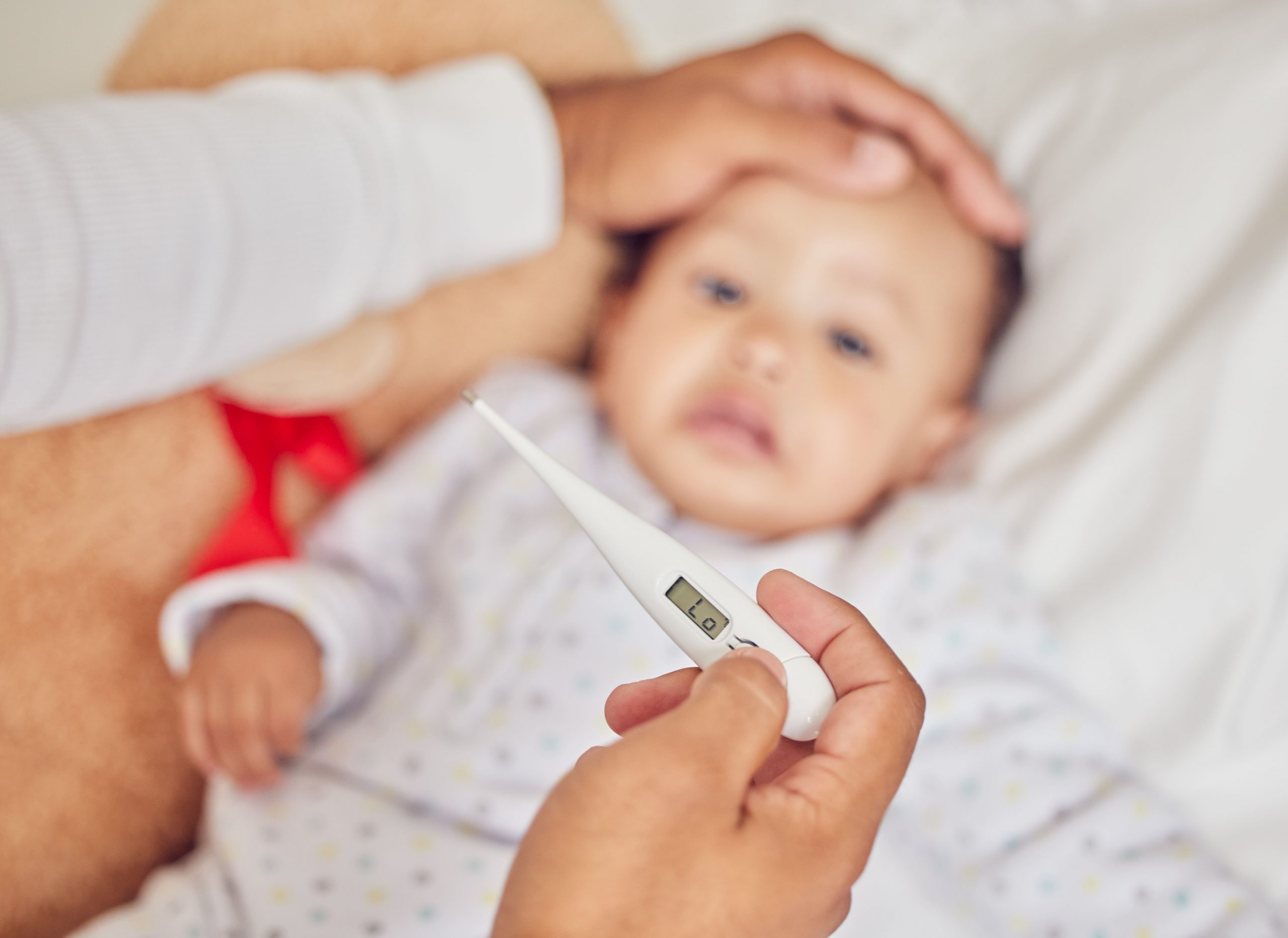
There are few experiences in a parent’s life quite as emotionally testing as caring for a sick baby. The combination of genuine worry about a small, vulnerable person who cannot describe their symptoms, the exhaustion of disrupted nights and constant close attention, and the uncertainty about when symptoms warrant professional medical assessment and when they can be managed safely at home creates a level of parental anxiety that is both entirely understandable and genuinely difficult to navigate without guidance. Babies do become ill — respiratory infections, ear infections, digestive upsets, fevers, and the full range of common childhood illnesses are a normal and inevitable part of infant life whose management, while rarely pleasant, is something that informed and well-supported parents can navigate with confidence rather than constant alarm. The key is knowing what the normal course of common infant illnesses looks like, what supportive home care genuinely helps a sick baby feel better and recover more quickly, when symptoms cross the threshold that makes professional medical assessment urgent rather than advisable, and how to take care of a parent’s own wellbeing alongside a sick baby whose care is both physically and emotionally demanding. This guide provides the comprehensive, honest, and compassionate guidance that every parent of a sick baby deserves — practical, specific, and grounded in the most current paediatric advice available.
Recognising When Your Baby Is Unwell: Symptoms That Warrant Attention
Babies cannot tell their parents where they hurt, how severe their discomfort is, or whether they feel better or worse than they did an hour ago — making the parental observation of behavioural and physical changes the primary tool for assessing the nature and severity of any infant illness. Developing the ability to recognise the specific symptoms and behavioural changes that indicate a sick baby — and to distinguish between those that warrant immediate emergency care, those that should prompt a same-day GP or NHS 111 consultation, and those that can be monitored and managed at home with close observation — is one of the most practically important skills any parent can develop, and one whose development is supported by the combination of medical guidance, experienced parental observation, and the honest communication with healthcare professionals that every parent should feel fully empowered to maintain.
A high temperature — fever — is one of the most common and most concerning symptoms that parents encounter in sick babies, and understanding what constitutes a fever, how to measure temperature accurately, and when a fever requires urgent medical attention is essential knowledge for any parent. In babies under three months old, any temperature of 38 degrees Celsius or above is considered a fever that requires immediate medical assessment — either a same-day GP appointment or, outside surgery hours, contact with NHS 111 or attendance at an urgent treatment centre. This lower threshold for urgent assessment in very young babies reflects the immature immune system of the newborn period whose response to infection can be less predictable and potentially more serious than in older infants. In babies between three and six months, a temperature of 38 degrees or above warrants a GP assessment, while in babies over six months a temperature of 39 degrees or above should prompt medical attention. The presence of fever in itself is not dangerous — fever is the immune system’s healthy response to infection and in most cases is beneficial rather than harmful — but its level, duration, and the accompanying symptoms together determine whether medical assessment is needed and how urgently.
Certain symptoms in a baby of any age require immediate emergency medical attention — calling 999 or going directly to Accident and Emergency — without waiting for GP availability or NHS 111 guidance. These include a baby who is difficult or impossible to wake, who is limp or unusually floppy, who has a fit or convulsion, who is having difficulty breathing — breathing very fast, making grunting noises with each breath, or showing visible recession of the chest between or below the ribs with each breath — who has a rash that does not fade when pressed with a glass (the tumbler test for meningococcal disease), who has turned blue or very pale around the lips, or whose cry is very different from their normal cry — extremely high-pitched, weak, or continuous in a way that feels genuinely alarming. These symptoms are warning signs of potentially serious illness whose prompt emergency assessment and treatment is genuinely urgent, and parents who encounter any of them in their baby should not hesitate to seek emergency care regardless of the time of day or night or the availability of any other form of medical contact.
Managing Fever: Safe and Effective Temperature Management at Home
When a baby has a fever and professional medical assessment has either confirmed that home management is appropriate or has not yet been sought because the fever is within the range that parental monitoring and home care can safely address, the practical management of the baby’s temperature and comfort is the most immediately actionable care task the parent faces. The goal of fever management in babies is not the aggressive reduction of temperature to normal at all costs — a misconception that leads some parents to over-medicate unnecessarily — but the maintenance of the baby’s comfort and hydration while the immune response does the work the fever supports, with temperature medication used when the baby is genuinely distressed by the fever rather than as an automatic response to any elevated reading.
Paracetamol-based infant medicines — including Calpol and its generic equivalents, which are available without prescription and are the most widely recommended first-line fever management medicines for babies in the UK — can be given to babies from two months of age in the weight-appropriate doses specified in the product instructions, and provide effective and safe temperature reduction and pain relief for most fevers encountered in babies of this age and above. Ibuprofen-based infant medicines are suitable for babies from three months of age who weigh at least five kilograms, and can be alternated with paracetamol medicines in cases where fever is high and the effect of a single medicine is wearing off before the next dose is due — a strategy recommended by some paediatricians for managing sustained high fevers that are causing significant infant distress. Both medicines should always be given at the correct weight-appropriate dose using the measuring syringe provided, and parents should always read the specific dosing instructions for the specific product being used rather than relying on general guidelines that may not apply to every product formulation.
Physical comfort measures alongside or instead of medicines — depending on the fever level and the baby’s apparent distress — include removing excess clothing and bedding to allow heat dissipation, ensuring the room is comfortably cool but not cold, offering frequent feeds whose fluid content supports the hydration that fever increases the body’s need for, and using a cool damp cloth gently applied to the forehead for brief periods if the baby seems comforted by it. Tepid sponging — the prolonged application of cool water to the baby’s body — is no longer recommended by UK paediatric guidance as a fever management strategy because its effects on core temperature are modest and its potential to cause shivering — whose metabolic heat production can paradoxically increase core temperature — makes it less beneficial than the simpler measures of clothing removal and fluid intake maintenance. The baby who is febrile but alert, feeding reasonably well, and not showing any of the emergency warning signs described in the previous section is a baby whose management at home with close parental monitoring is generally appropriate, and whose parents should feel confident in their ability to provide the caring, attentive support that recovery from a common infant illness requires.
Feeding and Hydration: Keeping a Sick Baby Nourished and Hydrated
Maintaining adequate nutrition and hydration in a sick baby is one of the most practically important and most frequently challenging aspects of caring for an unwell infant, because the combination of reduced appetite, increased fluid requirements from fever or respiratory illness, and the discomfort of common symptoms including sore throats, nasal congestion, and ear pain can make feeding both more difficult and more urgently important simultaneously. The guidance that consistently underpins paediatric advice about feeding sick babies is deceptively simple — offer feeds frequently and responsively, prioritise fluid intake over solid food intake when the two are in competition for a baby’s limited capacity, and trust the baby’s own appetite signals while ensuring that the feeding opportunities are frequent enough and comfortable enough that genuine hunger or thirst is not missed behind the reduced appetite that illness naturally produces.
Breastfed babies whose mothers are able to continue breastfeeding through a period of illness receive the additional benefit of the maternal antibodies whose transfer through breast milk provides both direct immune support against the specific illness the mother has been exposed to and the comfort and security of the feeding relationship whose particular value during illness extends beyond pure nutrition into the emotional regulation and physical comfort that close contact with a nursing parent provides. Maintaining breastfeeding during infant illness is consistently recommended by paediatric and breastfeeding health organisations as both nutritionally and immunologically beneficial, and mothers who are concerned that their milk supply or feeding frequency may be affected by caring for a sick baby should contact a breastfeeding support organisation or health visitor for specific guidance and encouragement.
Formula-fed babies should continue to receive formula feeds at their normal concentration — there is no benefit to diluting formula during illness unless specifically advised by a healthcare professional for a specific medical reason — and the frequency of feed offerings should increase during febrile illness to compensate for the increased fluid losses that fever generates. The baby who is refusing feeds entirely, who is producing significantly fewer wet nappies than normal — fewer than half the usual number in a twenty-four-hour period is a concerning indicator — or who appears lethargic and uninterested in feeding in a way that goes beyond the normal reduced appetite of mild illness deserves prompt medical assessment whose objective is the evaluation of hydration status and the identification of any underlying cause of the feeding refusal that warrants specific treatment. Oral rehydration solutions — including Dioralyte and similar products — are recommended for babies with diarrhoea and vomiting whose fluid losses may exceed what normal feeds can replace, but should be used under healthcare professional guidance rather than as a first-line response to any episode of digestive illness whose cause and severity have not been assessed.
Comfort Care: Soothing a Sick Baby and Supporting Their Recovery
Beyond the specific medical management of fever, fluid intake, and symptom treatment lies the dimension of sick baby care that is hardest to prescribe in specific medical terms but that is equally important to the baby’s recovery experience and wellbeing — the warmth, the closeness, the responsiveness, and the consistent parental presence that communicates to a sick baby, who cannot understand what illness is or why they feel as they do, that they are safe, held, and unconditionally cared for. The comfort care dimension of sick baby management is not a soft add-on to the medical essentials — it is a genuinely therapeutic component of recovery whose contribution to stress hormone regulation, immune function, and the emotional security that underpins physical resilience is supported by the research on infant attachment and stress physiology.
Skin-to-skin contact and close physical holding — whose value for sick babies extends directly from the profound comfort and regulatory benefits it provides for healthy newborns — reduces cortisol levels, supports temperature regulation, encourages feeding, and provides the specific security of close parental presence whose reassuring sensory qualities are as meaningful to a sick older baby as to a newborn. Parents who find that their sick baby is most settled when held or carried should feel fully validated in providing this level of contact as a genuine therapeutic measure rather than as an indulgence that will create dependency — a concern that is both developmentally unfounded and particularly poorly timed when applied to a baby whose illness makes the need for close comfort and physical reassurance most acute. Nasal saline drops and gentle nasal aspiration — using a bulb syringe or dedicated nasal aspirator device — can provide significant comfort relief for babies whose nasal congestion is disrupting sleep and feeding, and whose blocked nose is producing the distressed, restless behaviour that follows the inability to breathe comfortably through a clear nasal passage.
The sleep environment of a sick baby deserves particular attention during illness, with safe sleep principles — baby on their back, in their own sleep space, with no loose bedding, soft toys, or bumpers — maintained even when the parent’s instinct to keep the baby closer for comfort and monitoring purposes is entirely understandable and entirely natural. Room-sharing — placing the baby’s cot or Moses basket in the parents’ room — during periods of illness provides the monitoring reassurance that parents need and the proximity that supports faster response to changes in the baby’s condition without compromising the safe sleep environment whose maintenance is as important during illness as at any other time. The parents who provide this combination of medically informed home management, generous physical comfort and close presence, consistent feeding support, and the careful monitoring that distinguishes appropriate home care from the delayed medical help-seeking that can turn a manageable illness into a serious one are providing the most comprehensive and most genuinely effective care that any sick baby could receive.
Looking After Yourself While Caring for a Sick Baby
The wellbeing of the parents and carers who provide the intensive, round-the-clock care that a sick baby requires is not a peripheral concern to be addressed after the baby’s needs have been fully met — it is a genuinely important component of the care equation whose neglect progressively undermines the quality of the care that exhausted, anxious, and unsupported parents are able to provide. The sleep deprivation that accompanies caring for a sick baby is both practically inevitable and genuinely physiologically demanding, and the importance of accepting help, resting when the baby sleeps, sharing the caring load with a partner where possible, and maintaining the basic self-care whose neglect most rapidly compounds parental exhaustion deserves to be stated as directly and as unambiguously as any other aspect of sick baby care.
Accepting offers of practical help from family members, friends, and the broader support network that every new parent deserves to be able to call on is one of the most important and most commonly neglected forms of self-care available during a period of infant illness whose demands on parental physical and emotional reserves are genuinely significant. The friend who offers to bring a meal, the grandparent who can sit with a sleeping sick baby for two hours while a parent sleeps or showers, and the partner who takes the overnight shift so that the primary carer can achieve a sustained block of sleep are all providing support whose value to the quality of ongoing parental care is directly proportional to the exhaustion that round-the-clock sick baby management inevitably produces. The wellbeing of the carer is not separable from the quality of the care they provide — a parent who is adequately rested, adequately nourished, and adequately supported in their caring role is a more effective, more observant, more emotionally regulated, and ultimately more genuinely caring presence for their sick baby than one who has depleted their reserves entirely in the service of continuous vigilance and self-sacrifice whose romantic framing in cultural narratives of parenting does nothing to mitigate its genuinely unsustainable physiological consequences.
The gifts and care that a parent receives during the period of caring for a sick baby — the practical gifts of meals, of household help, of baby supplies whose provision removes one small logistical burden from an already heavily burdened parental attention — are among the most genuinely valued expressions of support that any social network can provide, and their acceptance with gratitude rather than deflection with the performed self-sufficiency that many parents feel cultural pressure to maintain is both emotionally healthy and practically sensible. The sick baby who is cared for by parents who have allowed themselves to receive the support they need is a sick baby whose recovery environment includes the sustained warmth, attentiveness, and genuine presence of a caring adult who has enough left in reserve to provide it — the most important single thing that any sick baby needs to recover and return to the healthy, growing, inquisitive engagement with life that every well-cared-for infant deserves.
Conclusion
Caring for a sick baby is one of the most emotionally demanding and most practically challenging experiences that early parenthood produces — a period whose successful navigation depends on the combination of medical knowledge, practical caring skills, emotional resilience, and the willingness to seek and accept professional guidance and personal support that together constitute genuinely excellent infant care during illness. The recognition of emergency warning signs that require immediate medical attention, the safe and effective management of fever and feeding challenges at home, the generous provision of physical comfort and close parental presence, and the honest maintenance of parental wellbeing through the acceptance of help and the prioritisation of rest are not separate concerns but deeply interconnected dimensions of the same caring endeavour whose quality at each point influences the quality of everything else. The baby who recovers from illness in the arms of parents who are informed, prepared, attentive, and supported has received the most complete and most genuinely loving care that the challenging circumstances of infant illness allow — and the parents who have provided it, despite their exhaustion and their worry, have demonstrated exactly the combination of practical capability and unconditional love that every child deserves at their most vulnerable.